

How do automated unpacking and feeding robots improve production efficiency?
Release time:
2025-08-11
In industries like chemical, food, and pharmaceuticals, raw material unpacking and feeding is a critical step in the production line.
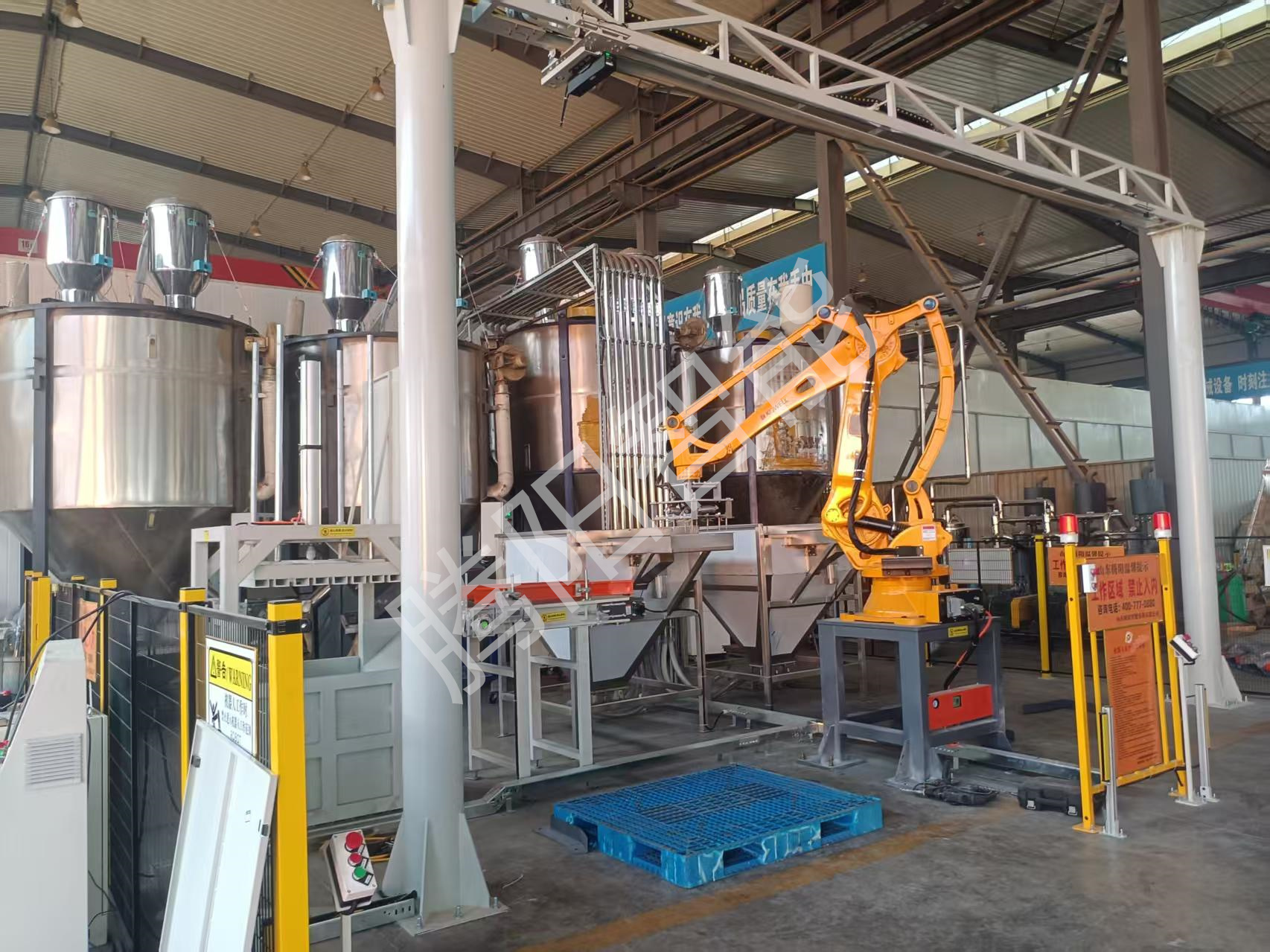
In industries like chemical, food, and pharmaceuticals, raw material unpacking and feeding is a critical step in the production line. Traditional manual operations are inefficient, labor-intensive, and prone to contamination and errors. The introduction of automated unpacking and feeding robots is revolutionizing this situation!
1. 24-hour continuous operation, increasing efficiency by more than three times
The robots can automatically unpack, dump, and recycle packaging, processing speeds of up to 500-1000 bags per hour, far exceeding manual feeding efficiency and significantly shortening production cycles.
2. Accurate feeding reduces waste
Using visual recognition and weight sensing, the robots precisely control feeding amounts, eliminating human error and reducing raw material loss, potentially saving 5%-10% in annual costs.
3. Eliminate pollution and ensure production safety
The enclosed design and negative pressure dust removal system prevent dust from escaping, making it particularly suitable for industries with high hygiene standards, such as food and pharmaceuticals, and reducing the risk of cross-contamination. 4. Reduce labor costs and occupational injuries.
Replacing manual lifting of heavy loads (e.g., 25-50 kg bags) reduces muscle strain and workplace injuries, while also alleviating labor shortages.
Automated unpacking and feeding robots are not only a powerful tool for improving efficiency but also a core piece of intelligent production equipment. If your factory still relies on manual feeding, now is the perfect time to transition to automation!
Latest News
GET A FREE QUOTE
If you are interested in our products and services, please contact us or leave us a message, we will serve you wholeheartedly
CONTACT US
Address : Shandong Tai'an Feicheng High-tech Development Zone



TikTok


YouTube

